“The mental health of young Australians is rapidly declining. The evidence for this is increasingly solid and reflects a worldwide trend.”
Over the last decade, Australia has experienced what some people call an epidemic of mental ill-health among young people.
This is reflected in both objective (i.e., suicide and hospitalisation rates) and subjective (i.e., self-reported psychological distress) measures of mental ill-health.

When considering objective measures, how the mental health crisis has developed among young people is striking. For example:
The annual suicide rate of males aged 15-19 jumped from 9.6 per 100,000 people in 2012 to 17.5 per 100,000 people in 2020 (AIHW, 2023).
The annual self-harm hospitalisation rates among females aged 15-19 increased from 494.7 per 100,000 in 2012 to 703.4 in 2020 (AIHW, 2025a).
Similarly, when considering subjective measures, increases in psychological distress over time are further apparent. For example:
The prevalence of mental disorders among young people aged 16-24 increased from 26% in 2007 to 39% in the 2020-2022 period (AIHW, 2025b)
Nationally-representative household surveys have found the prevalence of psychological distress among people aged 15-24 has also increased from 18.4% in 2011 to 37.6% by 2023 (Laß et. al., 2025).
In addition to these, Mission Australia has released Mental Health Reports showing consistent increases in psychological distress among young people.
Scroll to continue…
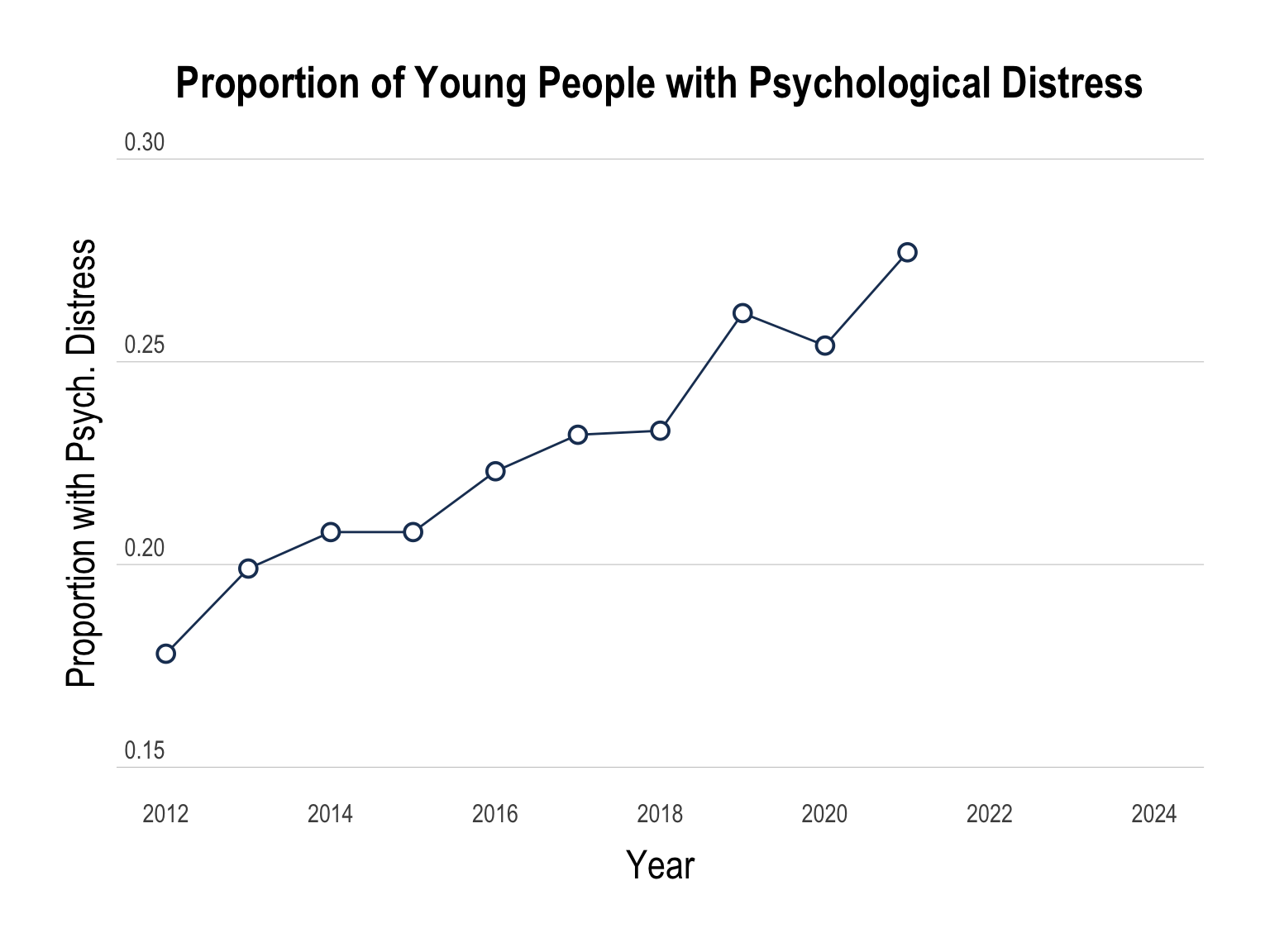
Mission Australia has surveyed the psychological distress of high-school-aged students in the annual Youth Survey since 2012.
This report will focus on trend analysis, specifically how psychological distress has changed over time. This is important because it gives us an indication of the trends that led to today and where we may be headed.
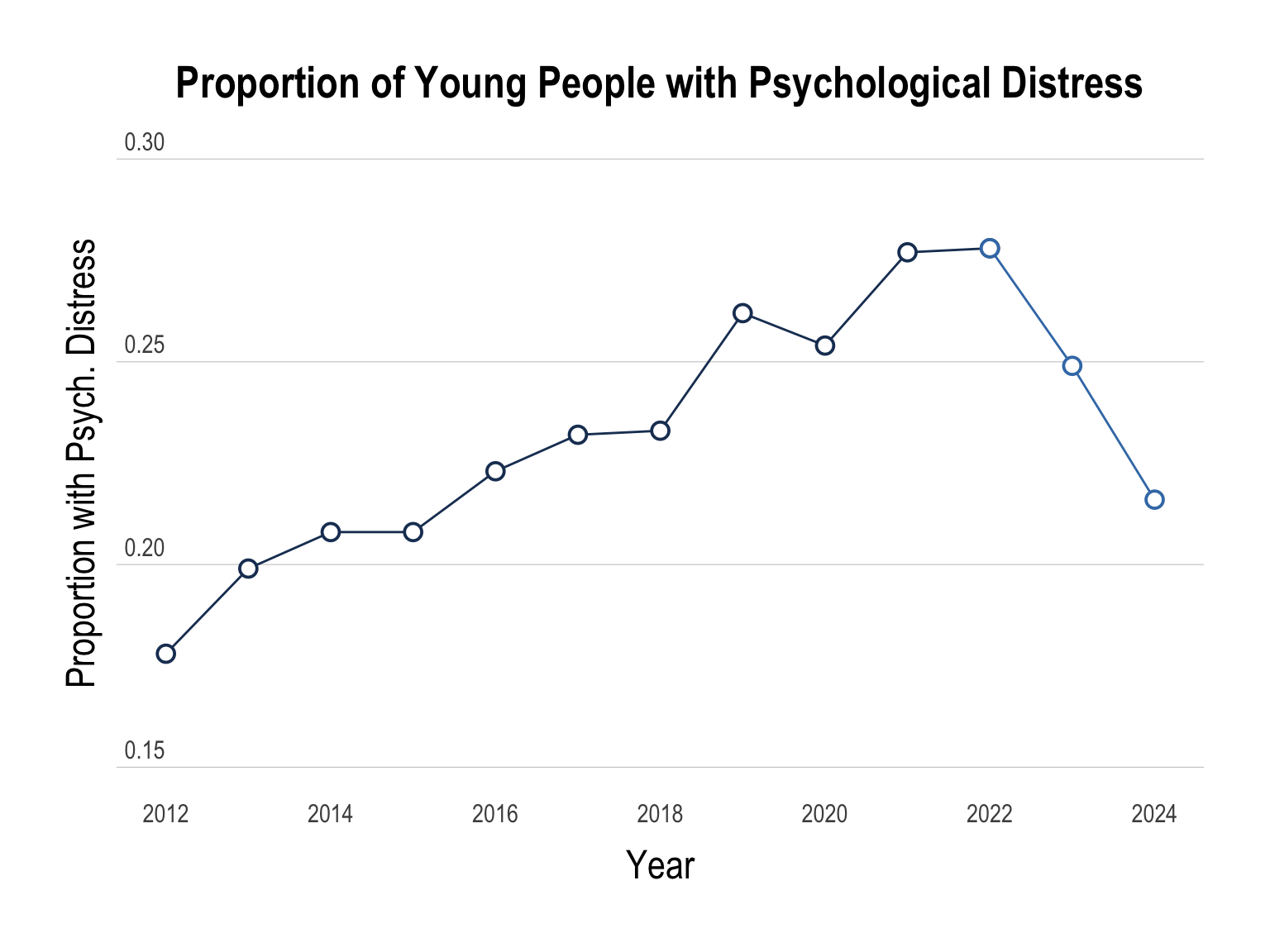
In 2012, around 18% of young people suffered psychological distress.
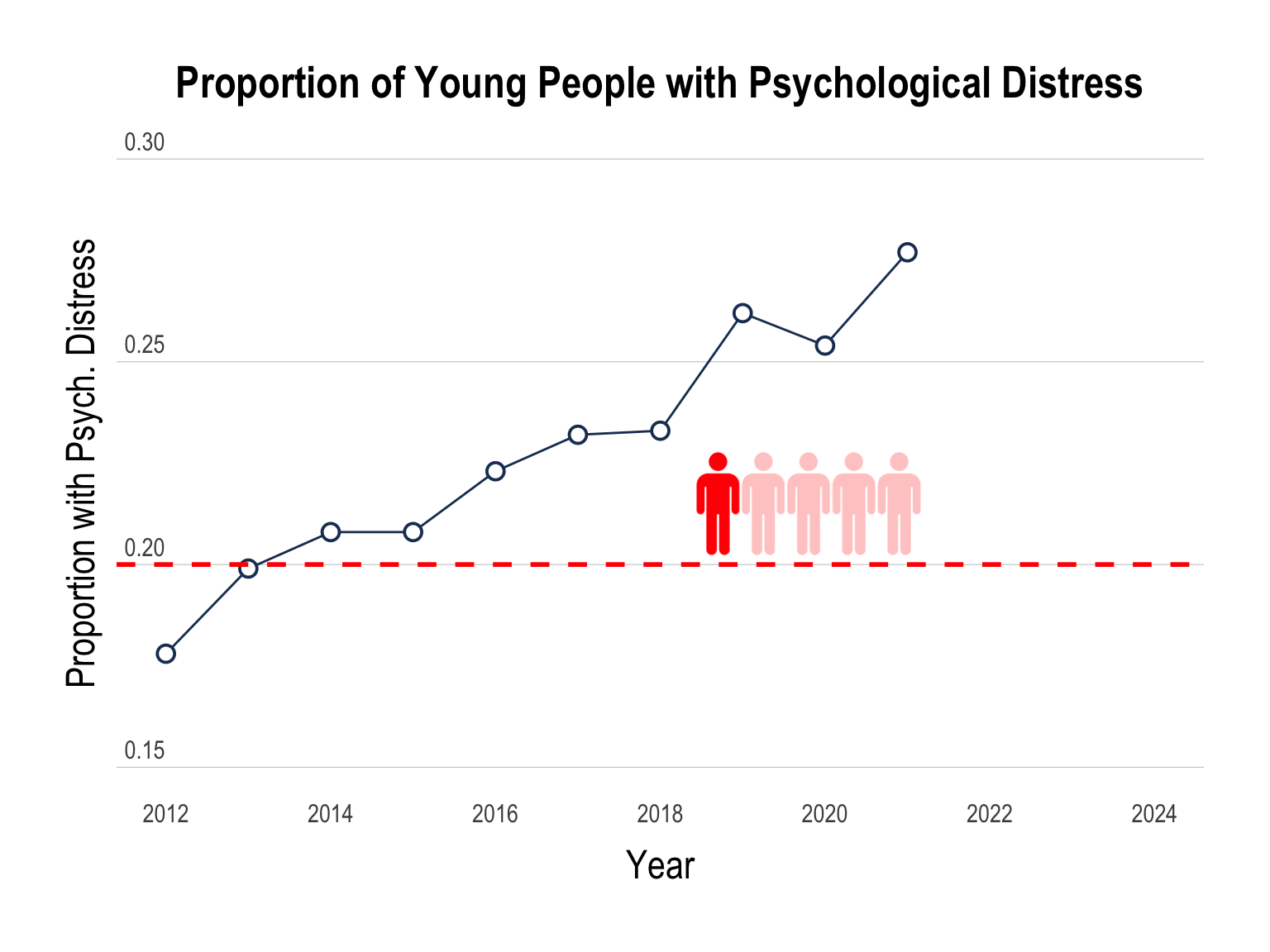
In 2013, this rose to around 20% of young people with psychological distress. This represents 1 in 5 young people.
By looking at the years from 2012 to 2021, we see that the proportion of young people with psychological distress has steadily increased.
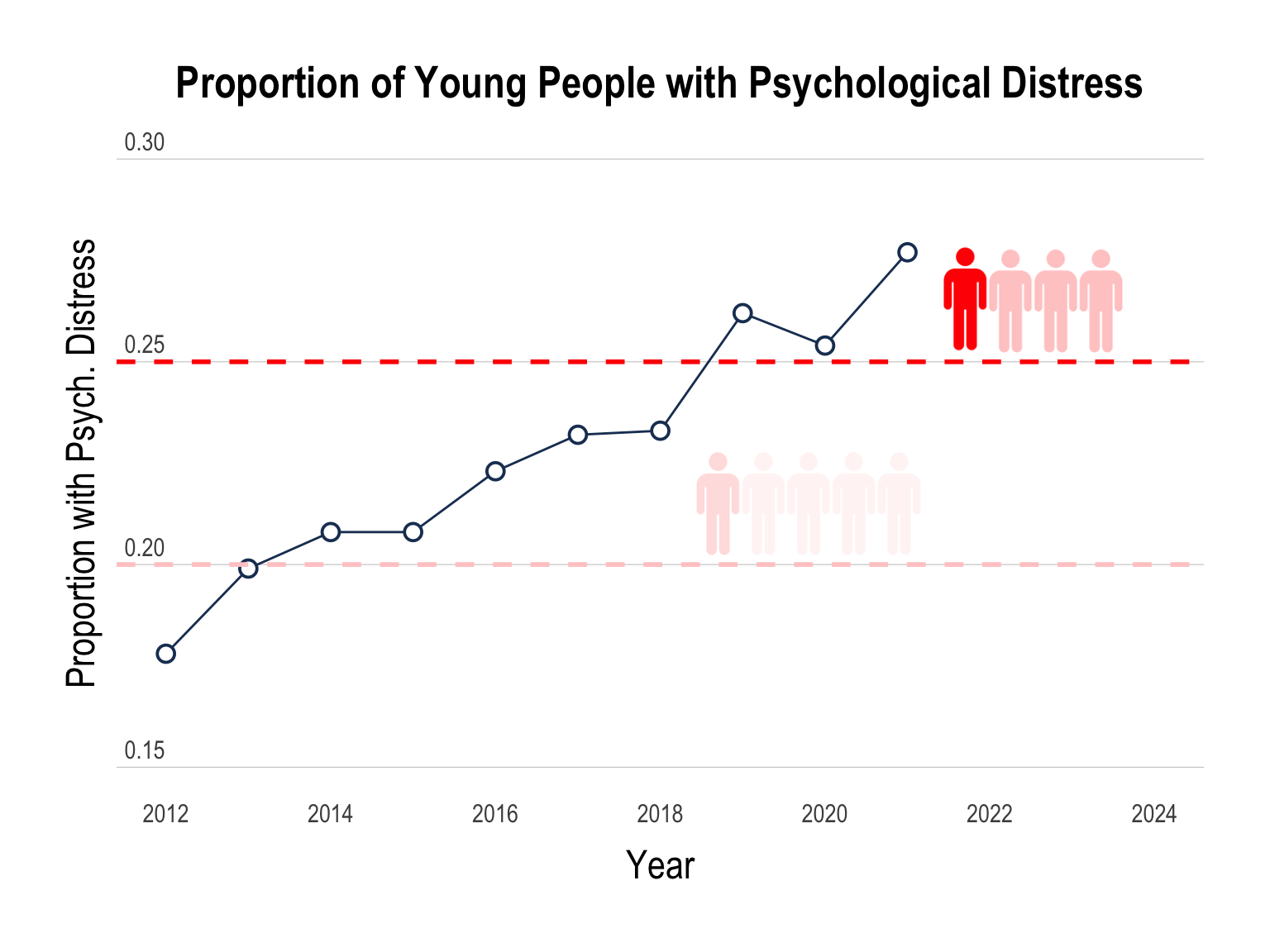
It has gone from around 1 in 5 young people suffering psychological distress to more than 1 in 4.
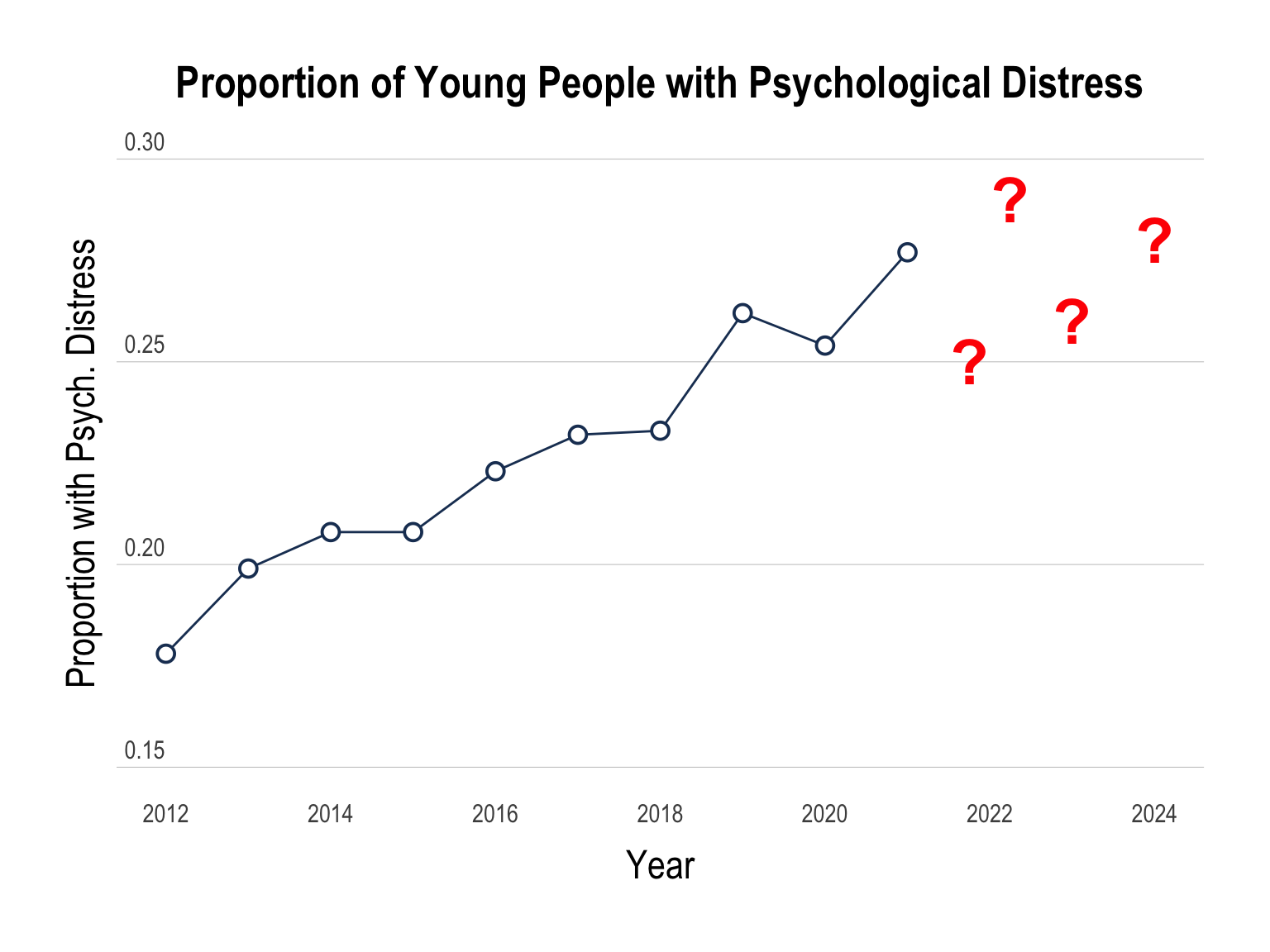
But what happens after 2021?
From 2022 to 2024, we actually see that the trend in the proportion of young people suffering psychological distress decreases.
While it is promising that the rates of psychological distress have decreased in Australia’s youth, we see that there is still a large discrepancy in psychological distress among higher-risk groups.
The remainder of the report will explore some of these findings, as well as offer potential reasons as to why there has been a decrease in psychological distress in Australia’s youth.
The Gap in Specific Sub-Groups Has NOT Improved
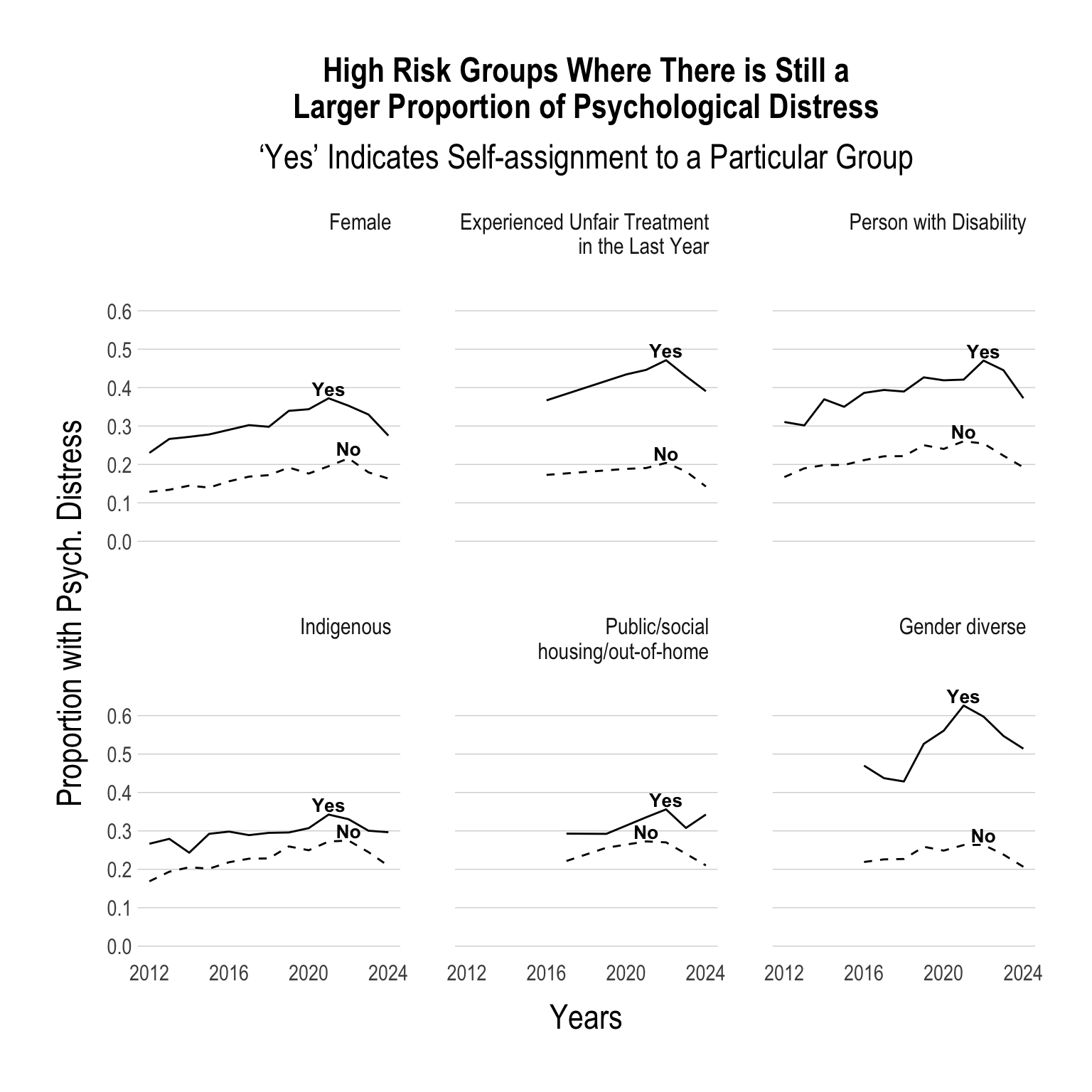
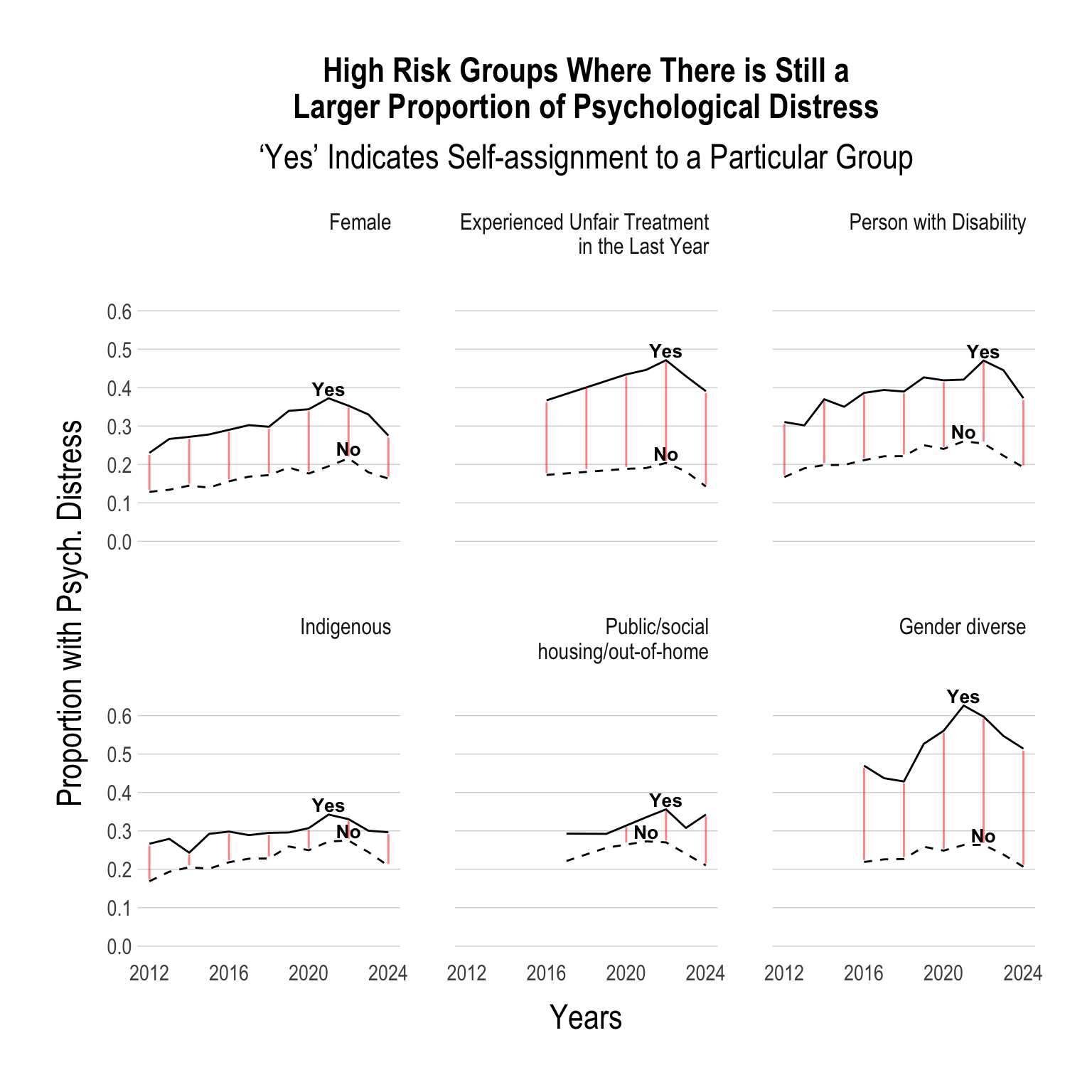
While the proportion of young people with psychological distress has been on the decline, the gap within specific sub-groups has not decreased.
Continue below…
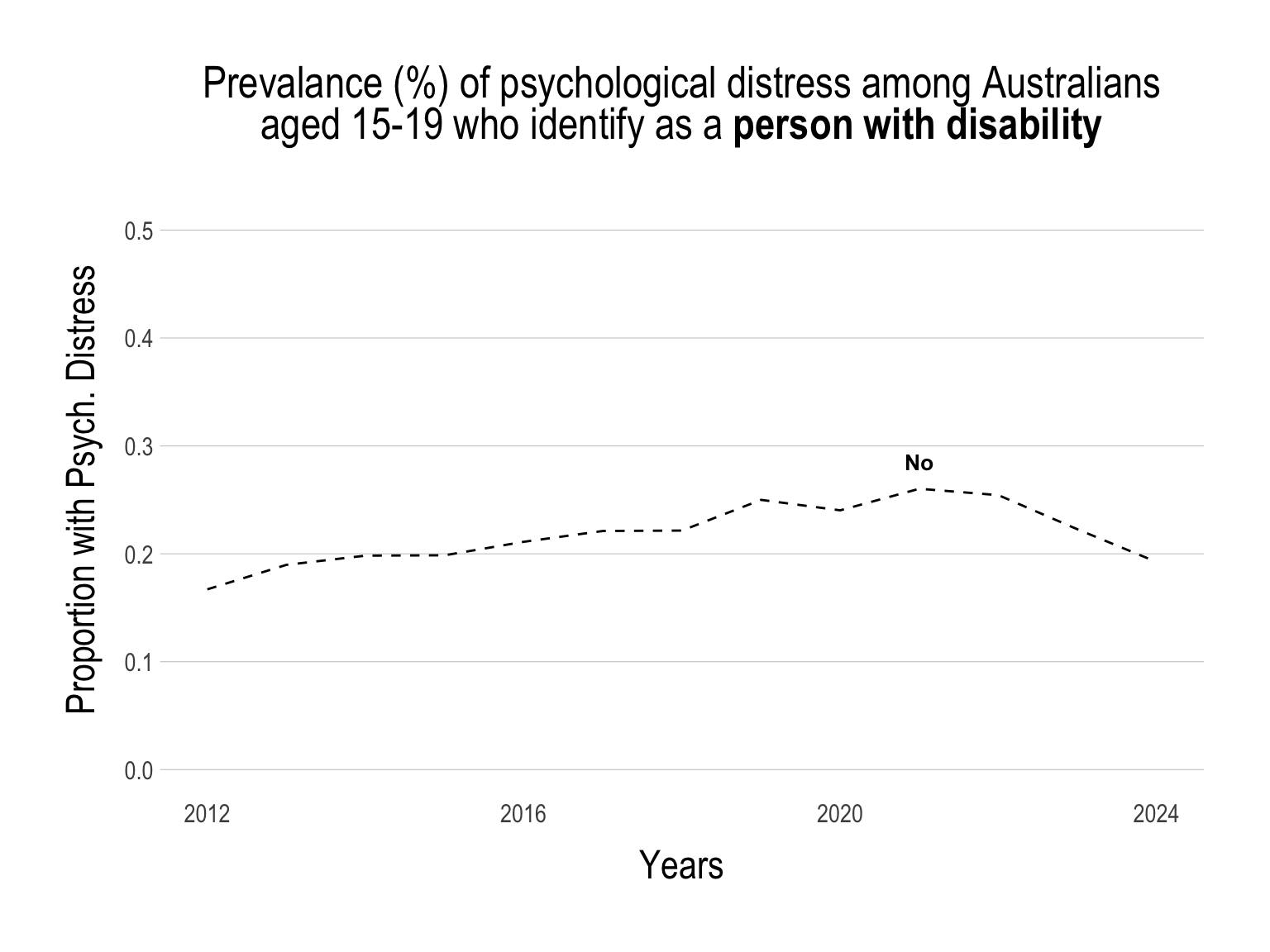
One group where there is still a large discrepancy in psychological distress is those who identify as living with a disability.
First, let’s look at the proportion with psychological distress for those who DO NOT (i.e., the “No” line) identify as having a disability.
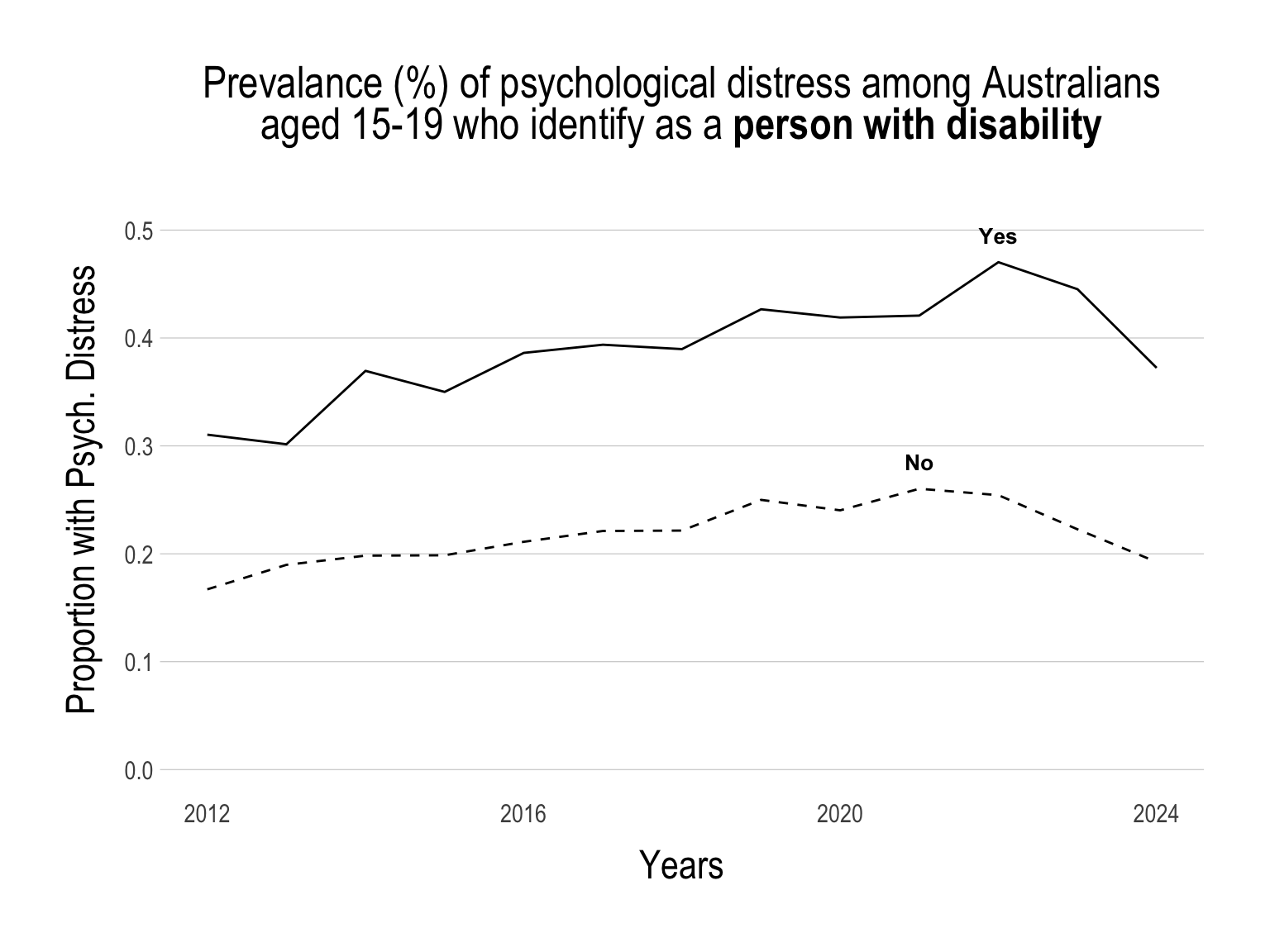
Now, we add on the psychological distress for those who DO (the “Yes” line) identify as a person living with a disability.
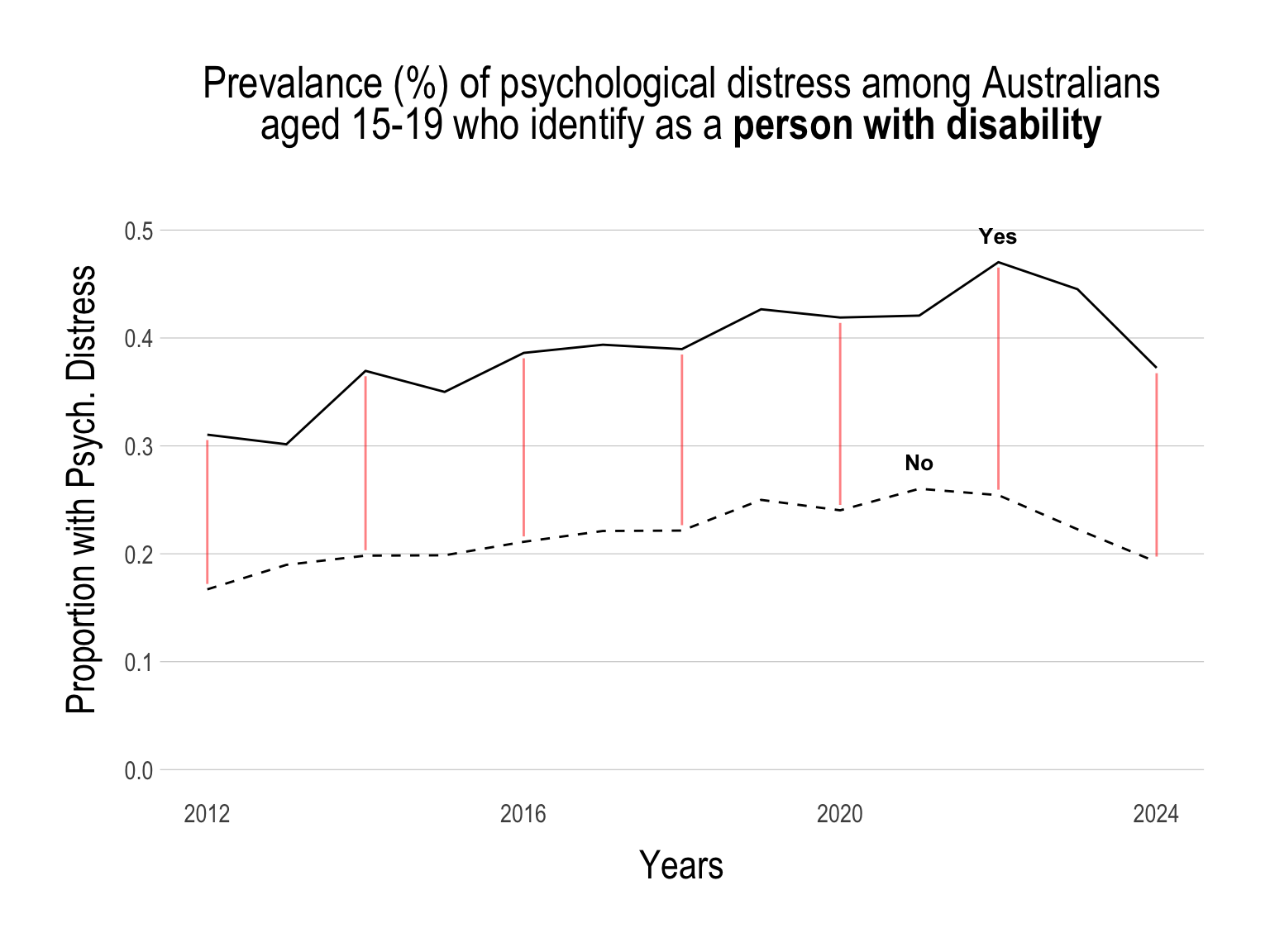
While both lines do seem to fall in 2022, there is still a considerable gap between those experiencing psychological distress among young Australians who identify as a person with disability, and those who do not.
This means that there is a much larger proportion of young people suffering psychological distress if they identify as living with disability than those who do not live with disability.
There are also large discrepancies in other groups.
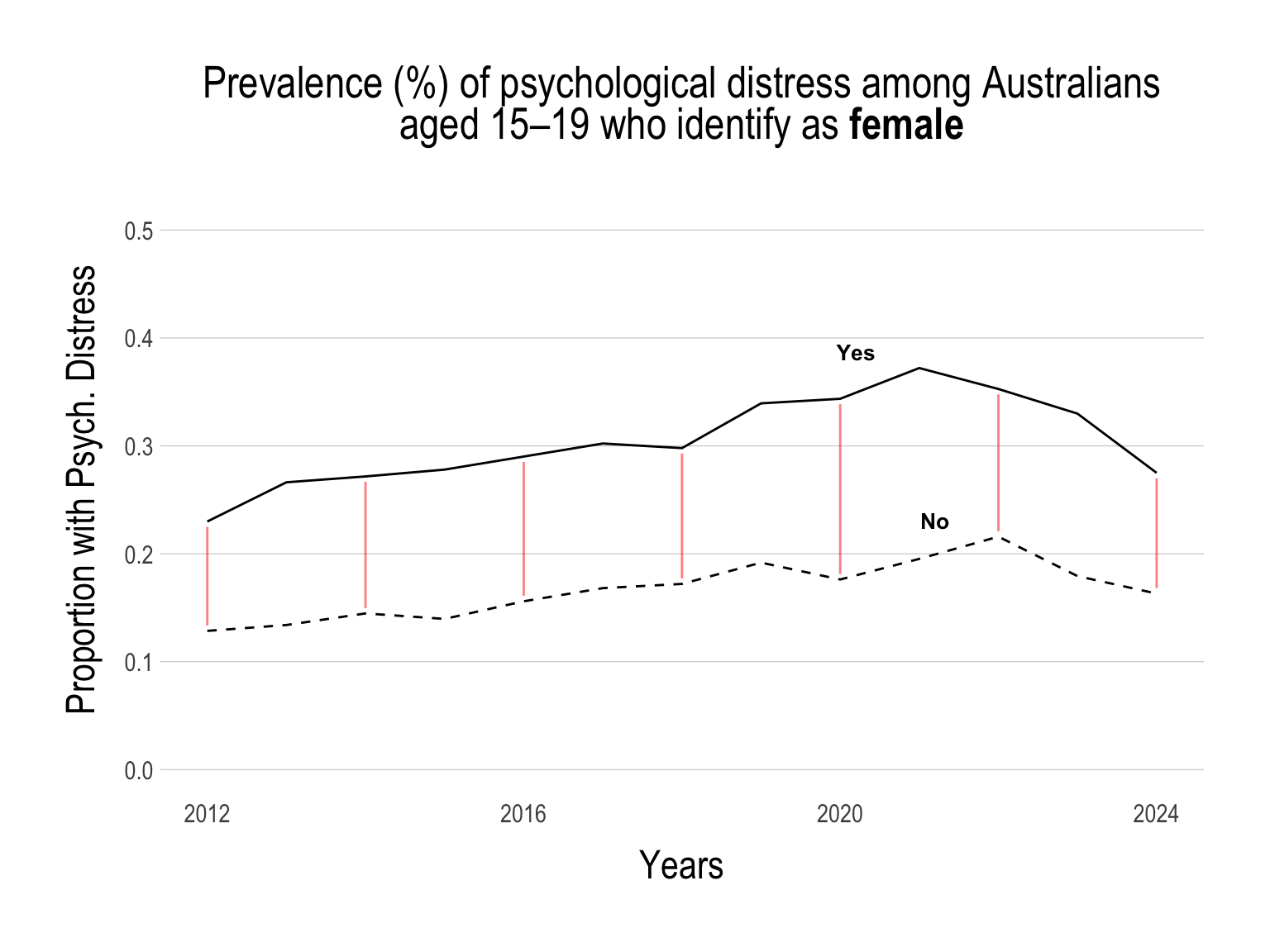
For example, when grouping responses by whether someone identifies as female or not, we see that there is a much higher proportion of females (the “Yes” line) who suffer from psychological distress.
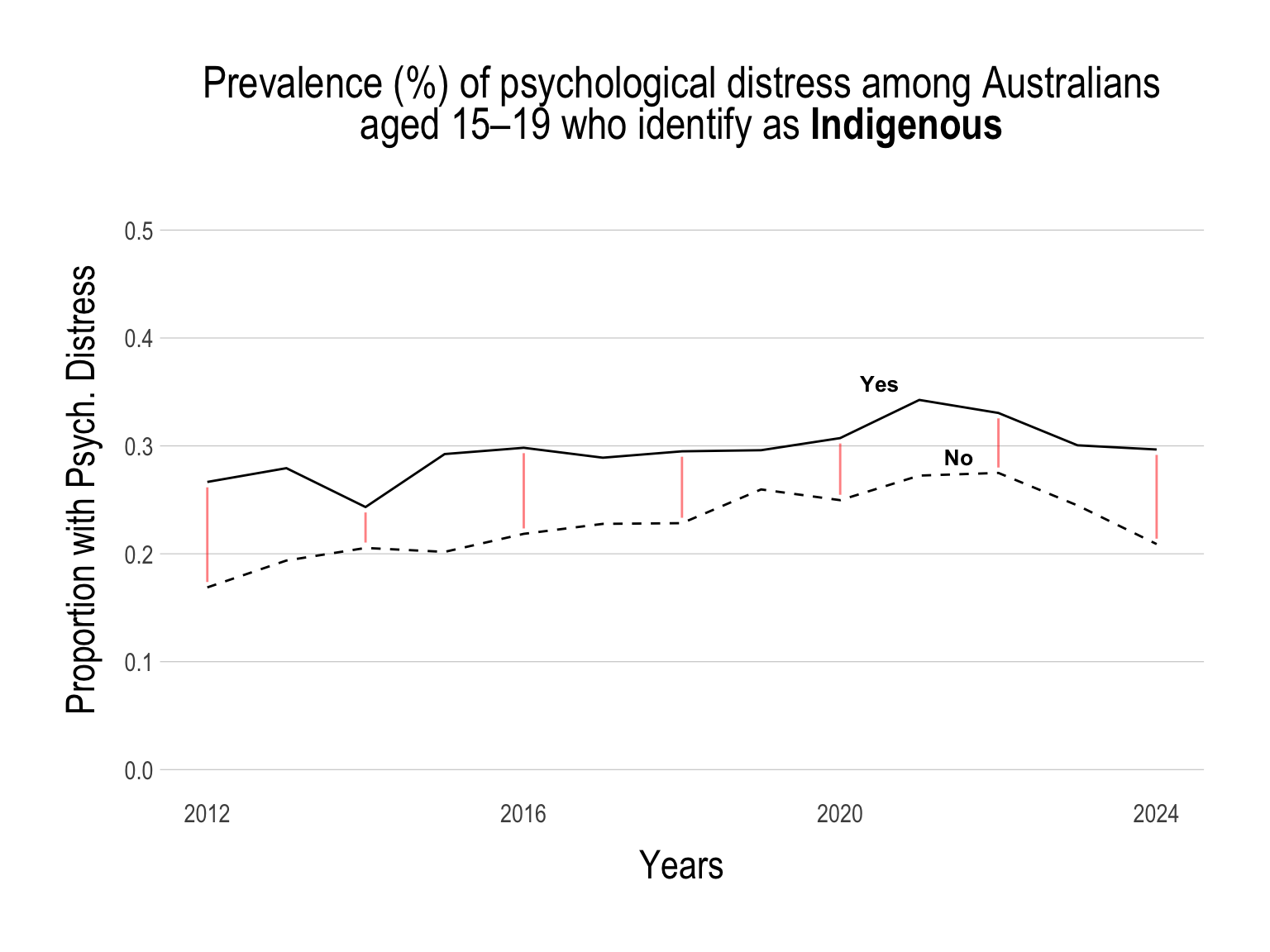
We also see a discrepancy with those who identify as Indigenous.
There is a higher proportion of people who identify as Indigenous (the “Yes” line) suffering from psychological distress than those who do not (the “No” line).
From the data, we present five groups which show larger psychological distress than people who do not identify as part of the group. These groups are whether someone identifies as:
• Female (57% of respondents)
• Someone who experienced unfair treatment in the last year (28% of respondents)
• A person with disability (6% of respondents)
• Indigenous (5% of respondents)
• Public/social housing/out-of-home (5% of respondent)
• Gender diverse (3% of respondents)
We saw earlier that the proportion of young people suffering psychological distress has decreased from 2022 to 2024.
When looking at different groups, there have also been decreases in the proportion of psychological distress from 2022 to 2024, yet there remains a large gap between those who identify as part of these groups and those who do not. This is despite the National Action Plan (NAP 2019) deeming mental health equity across populations being a priority area.
Regional vs Urban Australia
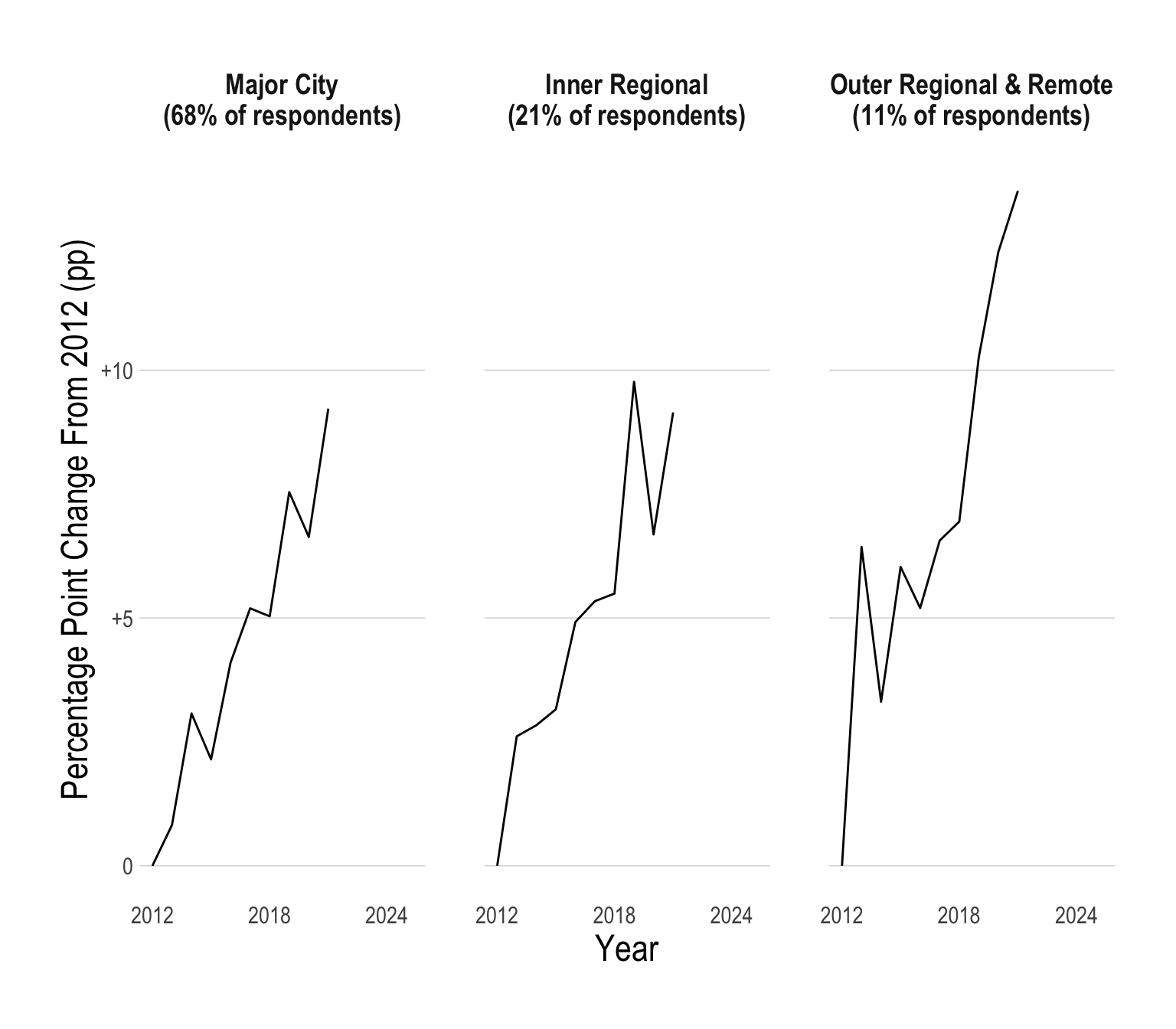
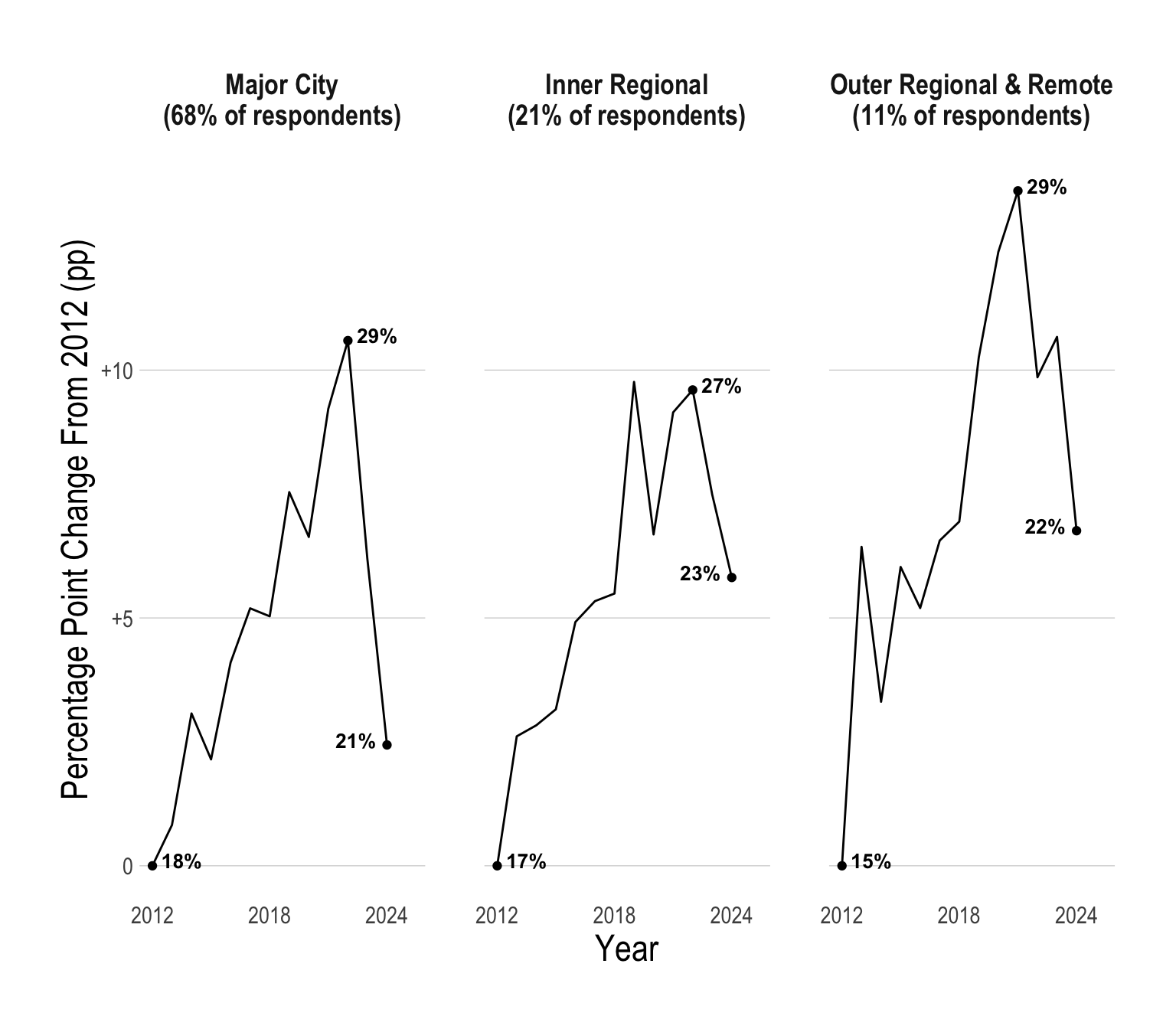
Historically, a smaller proportion of young people in regional Australia have had psychological distress when compared to young people in major cities. However, recently, there has been a massive spike in young people in outer regional and remote parts of Australia suffering from psychological distress.
Continue below…
The plot on the right is called a change-from-baseline plot. In particular, this plot shows how psychological distress has changed each year relative to 2012 expressed as percentage points. For example, if in 2012, 22% of people had psychological distress, and in 2021, 37% had psychological distress, this is a 15 percentage point (15pp) difference relative to 2012.
From 2012 to 2021, there has been a substantial increase in psychological distress in young people across all parts of Australia.
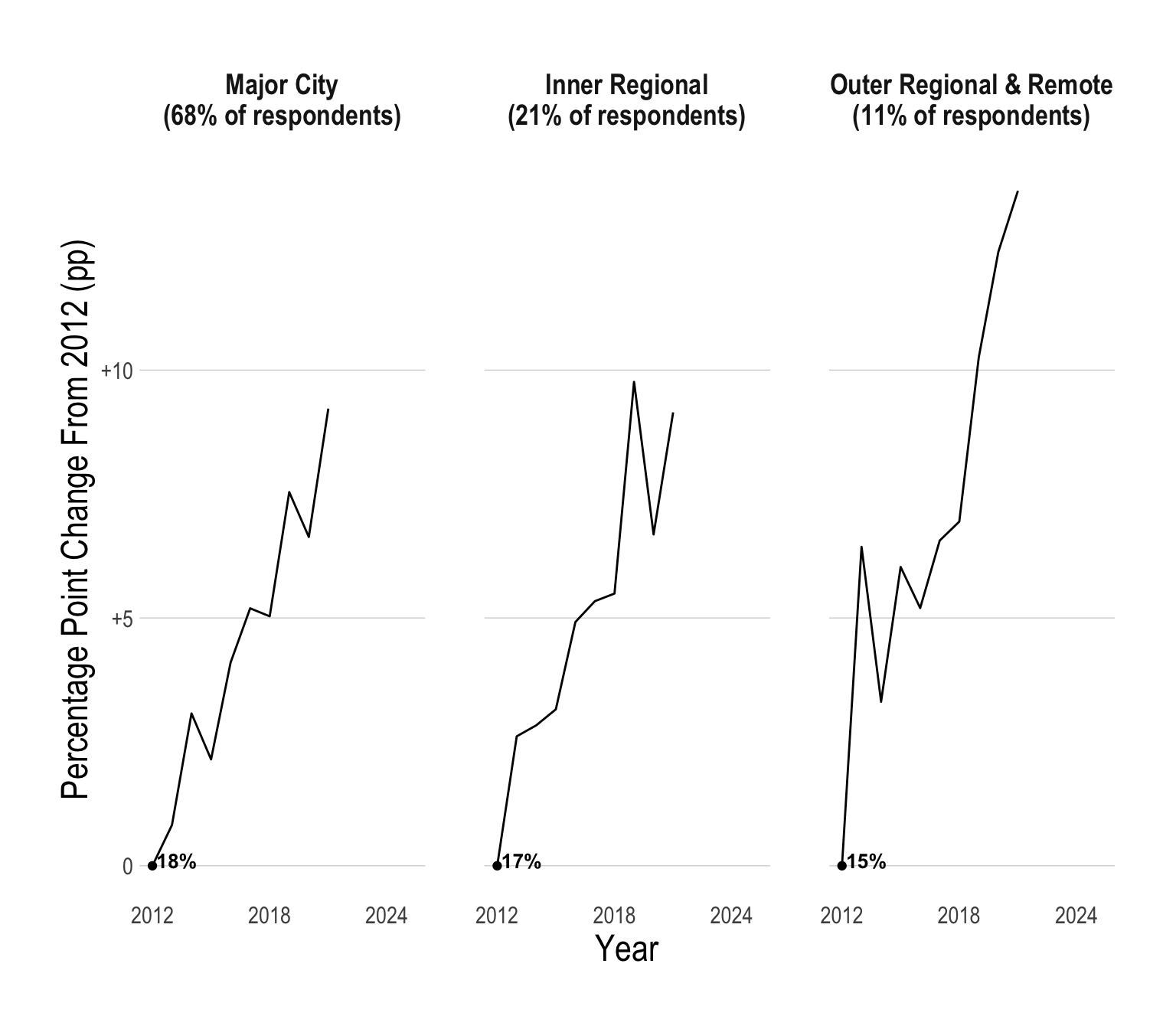
Now added to the plot are the actual proportions of young people in each geographic category suffering from psychological distress in 2012.
We see that of the three groups, the ‘Outer Regional & Remote’ youth had the lowest proportion of youth suffering psychological distress, with only 15% experiencing distress.
The ‘Major City’ group has the highest initial proportion of young people with psychological distress, with 18% of young people suffering.
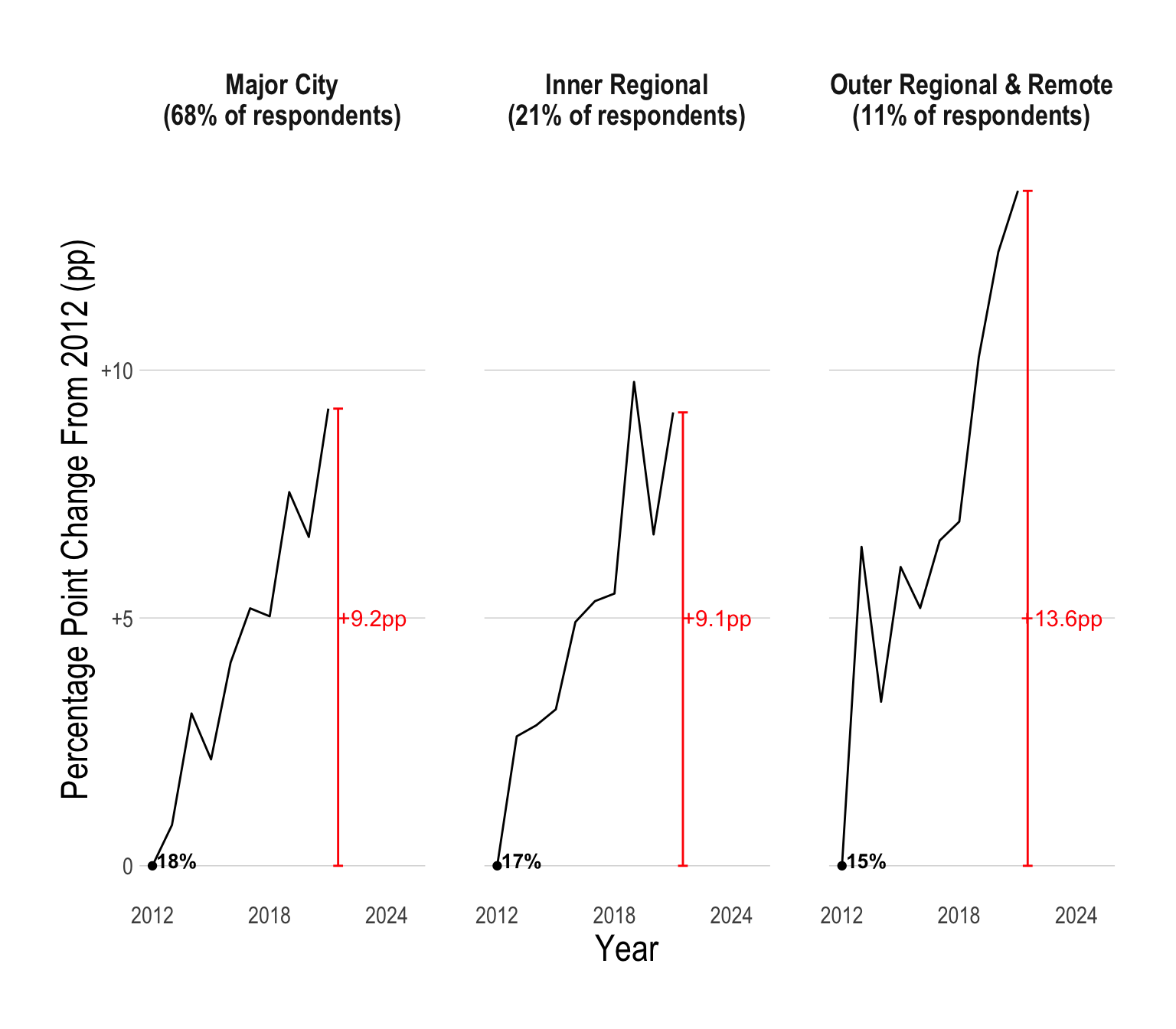
It is striking that despite ‘Outer Regional & Remote’ having the lowest starting psychological distress value in 2012, its increase has been much larger than that of the other groups at 13.6 percentage points, compared to around 9 percentage points in the other groups.
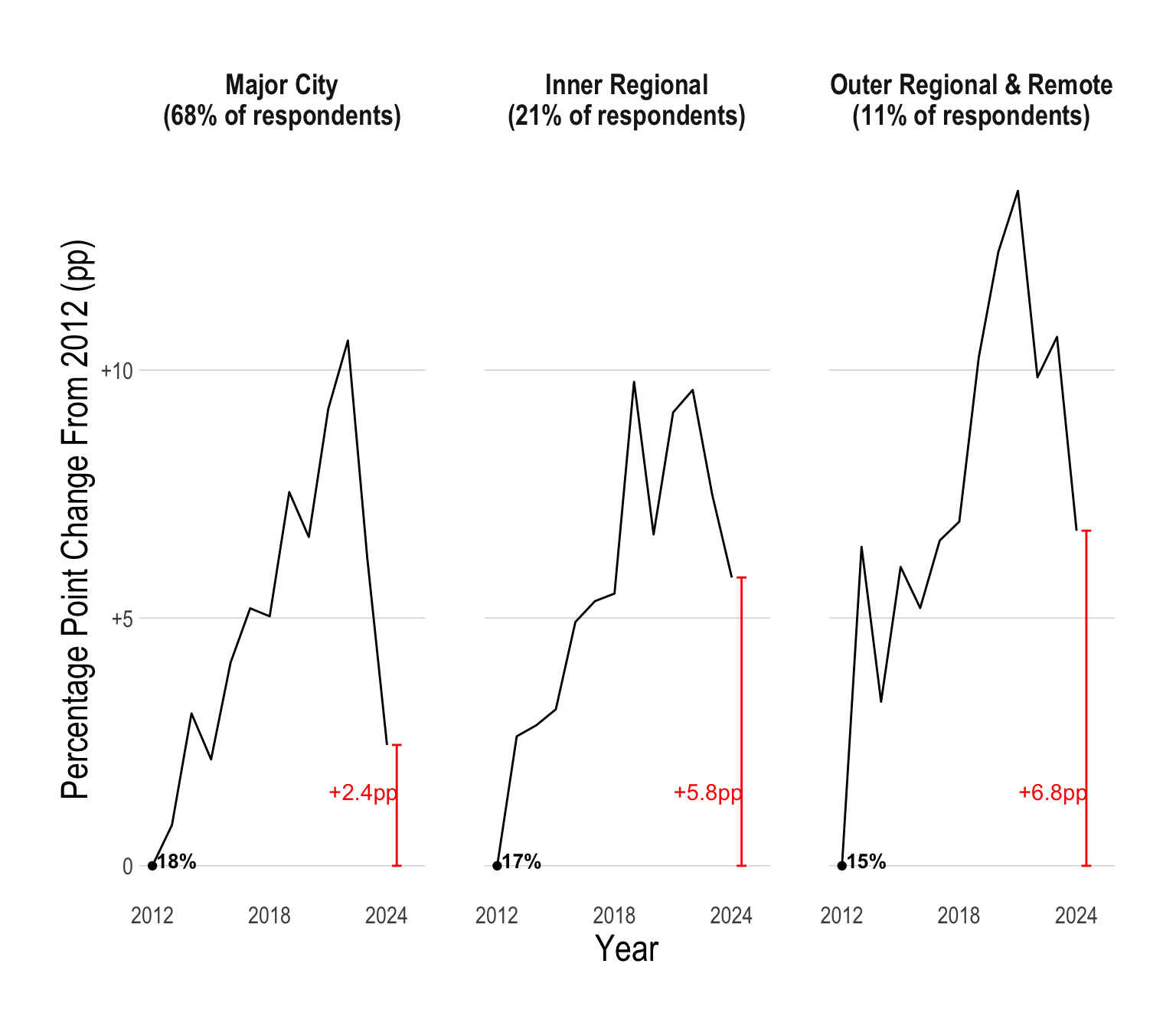
Now, let’s observe what happens when we add data up to 2024.
We see that all locations have a decrease in psychological distress. The reduction in the ‘Major City’ group is so large that psychological distress returns within 2.4 percentage points of the 2012 starting value.
The ‘Inner Regional’ and ‘Outer Regional & Remote’ groups have also had decreases, yet they remain far from their 2012 starting values.
Finally, on the plot, we annotate the actual proportion of youth suffering from psychological distress for selected years.
Despite the ‘Major City’ group having the highest psychological distress score of 18% in 2012, it now has the lowest score of all groups in 2024 of 21%.
This indicates that regional parts of Australia have not seen as significant decreases in psychological distress relative to where they started in 2012. Additionally, while the ‘Major City’ group had worse psychological distress when compared to the other localities in 2012, this has now flipped - regional areas are worse off.
Possible Explanations & Final Thoughts
It is crucial to recognise that this Youth Australia dataset, like most cross-sectional survey data, can only establish correlational relationships or associations between variables. It cannot definitively determine whether one thing causes another. Hence, from this Mission Australia data, we cannot know WHY psychological distress has decreased among young people in Australia.
In this section, we speculate at reasons why psychological distress levels rapidly decreased after 2022, which is perplexing as this period coincides with Australia coming out of the COVID pandemic.
Continue below…
One hypothesis for the decrease in psychological distress is due to the significant government investment (an additional $2.3 billion) in mental health and suicide prevention during the 2021-2022 federal budget. There were also significant investments made during the 2019-20 bushfires and the COVID-19 pandemic.
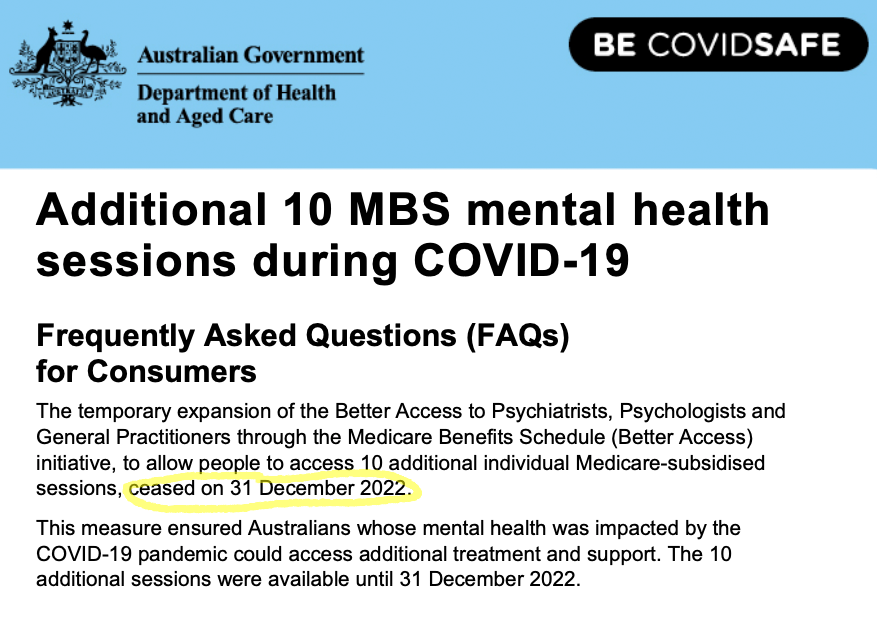
Also, during the COVID pandemic, the Australian government increased the number of Medicare-subsidised psychology appointments from 10 to 20, which could mean increased treatment leads to increased benefits that endure long after treatment has stopped (Cuijpers et al., 2012; Hollon et al., 2005).
To end the report, we share an excerpt from the Productivity Commission’s Mental Health and Suicide Prevention Agreement interim report (PC, 2025), which explains that most of the data they use was last collected in 2022.
As we see from the Mission Australia youth data, the trend in psychological distress has substantially changed since 2022, offering critical insight into how mental health metrics are changing over time.
It is essential to implement infrastructure for repeated data collection as collecting high-quality, consistent data is vital to support informed policy decisions.
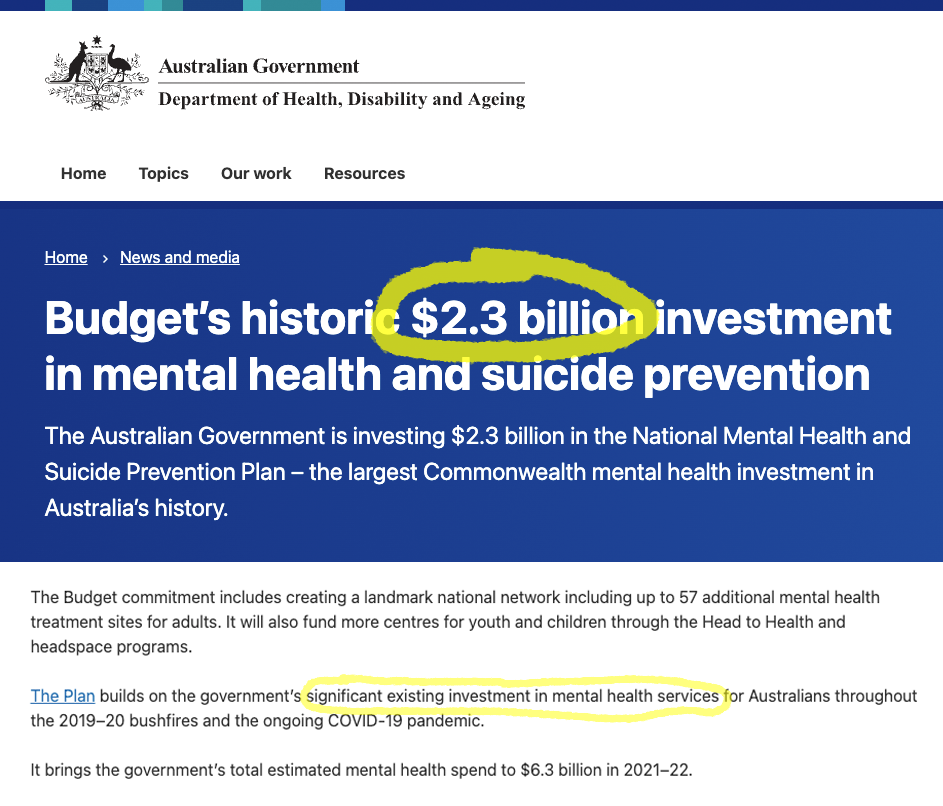
Source: Australian Government: Department of Health, Disability and Ageing , Published 11 May 2021
2.1 What do we know about the state of the mental health and suicide prevention system?
There is no data available to describe trends in the mental health and suicide prevention system over the
term of the Agreement. Most of the data was last collected in 2022 – the year the Agreement was signed.
However, this data provides a useful baseline to understand the outcomes of the mental health and suicide
prevention system in which the Agreement operates. This will build an understanding of where things are
working, where they are not and where more information is needed.
- 2025 Mental Health and Suicide Prevention Agreement Review: Interim Report (June 2025)
There is no data available to describe trends in the mental health and suicide prevention system over the
term of the Agreement. Most of the data was last collected in 2022 – the year the Agreement was signed.
However, this data provides a useful baseline to understand the outcomes of the mental health and suicide
prevention system in which the Agreement operates. This will build an understanding of where things are
working, where they are not and where more information is needed.
- 2025 Mental Health and Suicide Prevention Agreement Review: Interim Report (June 2025)
Supplementary Materials - What Counts as Psychological Distress?
Mission Australia has surveyed the psychological distress of young people (people aged 15 to 19) in the annual Youth Survey since 2012.
One of the main ways this is done is through the Kessler-6 (K6) test, a measure of ‘non-specific psychological distress’. As a ‘non-specific’ test, it focuses more on general psychological symptoms, which are useful at detecting depressive and anxiety symptoms. The K6 test includes six questions asking students how often in the past four weeks they have felt:
- Nervous
- Hopeless
- Restless or fidgety
- So depressed that nothing could cheer them up
- That everything was an effort
- Worthless
Students answer on a five-point scale ranging from ‘None of the Time’ (1 point) to ‘All of the Time’ (5 points). Total K6 scores range from 6 to 30, and based on the established Australian scoring criteria published by the Australian Bureau of Statistics (ABS, 2012), we distinguished young people with a K6 score greater than 18 as suffering from high psychological distress.
Citation
Please cite as:
Elton, T. J., Morris, R. W., Naheen, B., Freeburn, T., & Glozier, N. (2026). Youth Mental Health Update Digital Report: A Life Course Centre Report in Collaboration with Mission Australia.
Acknowledgments
We would like to thank Heidi Minchin for her assistance in designing this report and for creating an image used in this report.
AI Disclaimer
AI was used to aid in coding and finding literature.
References
Australian Bureau of Statistics (ABS). (2012). Information Paper: Use of the Kessler Psychological Distress Scale in ABS Health Surveys, Australia, 2007-08. Retrieved from https://www.abs.gov.au/ausstats/abs@.nsf/lookup/34333D54F054CE51CA2579D50015D786
Australian Bureau of Statistics (ABS). (2025). Schools. Data on government and non-government students, staff and schools Retrieved from https://www.abs.gov.au/statistics/people/education/schools/latest-release
Australian Government: Department of Heath and Aged Care (DOH). (n.d.-a). Additional 10 MBS mental health support sessions during COVID-19. Retrieved from https://www.health.gov.au/sites/default/files/2023-06/additional-covid-19-mbs-mental-health-support.pdf
Australian Government: Department of Heath and Aged Care (DOH). (n.d.-b). Additional 10 MBS mental health support sessions during COVID-19. Retrieved from https://www.health.gov.au/sites/default/files/2023-06/additional-10-mbs-mental-health-sessions-during-covid-19-faqs-for-consumers.pdf
Australian Government: Department of Health, Disability and Ageing. (2021). Budget’s historic $2.3 billion investment in mental health and suicide prevention. Retrieved from https://www.health.gov.au/news/budgets-historic-23-billion-investment-in-mental-health-and-suicide-prevention
Australian Institute of Health & Welfare (AIHW). (2023). National mortality database and ABS causes of death. AIHW Website. Retrieved from https://www.aihw.gov.au/suicide-self-harm-monitoring/resources/download-data-tables
Australian Institute of Health & Welfare (AIHW). (2025a). Intentional self-harm hospitalisations. Retrieved from https://www.aihw.gov.au/suicide-self-harm-monitoring/overview/self-harm-hospitalisations
Australian Institute of Health & Welfare (AIHW). (2025b). Prevalence and impact of mental illness. Retrieved from https://www.aihw.gov.au/mental-health/overview/prevalence-and-impact-of-mental-illness
Australian Psychological Society (APS). (n.d.) How much does seeing a psychologist cost? Retrieved from https://psychology.org.au/psychology/about-psychology/what-it-costs?utm_source=chatgpt.com on 13 Dec 2025.
Cuijpers, P., Hollon, S. D., van Straten, A., Bockting, C., Berking, M., Andersson, G. (2013). Does cognitive behaviour therapy have an enduring effect that is superior to keeping patients on continuation pharmacotherapy? A meta-analysis. BMJ Open 2013;3:e002542. doi: 10.1136/bmjopen-2012-002542
Hollon, S. D., DeRubeis, R. J., Shelton, R. C., Amsterdam, J. D., Salomon, R. M., O’Reardon, J. P., Lovett, M. L., Young, P. R., Haman, K. L., Freeman, B. B., Gallop, R. (2005). Prevention of relapse following cognitive therapy vs medications in moderate to severe depression. Arch Gen Psychiatry. 2005 Apr;62(4):417-22. doi: 10.1001/archpsyc.62.4.417. PMID: 15809409.
Laß, I., Botha, F., Peyton, K., & Wilkins, R. (2025). The Household, Income and Labour Dynamics in Australia Survey: Selected Findings from Waves 1 to 23. Melbourne Institute of Applied Economic and Social Research, The University of Melbourne. https://melbourneinstitute.unimelb.edu.au/hilda/publications/hilda-statistical-reports
McGorry, P. D., Coghill, D., & Berk, M. (2023). Mental health of young Australians: dealing with a public health crisis. The Medical Journal of Australia, 219(6), 246–249. https://doi.org/10.5694/mja2.52047
Productivity Commission (PC). (2025). Mental Health and Suicide Prevention Agreement Review - Interim Report. Retrieved from https://www.pc.gov.au/inquiries-and-research/mental-health-review/interim/